
Commercial Roof Replacement Cost Guide: What Contractors Actually Charge
Delving into the realm of commercial roof replacement costs, this guide sheds light on what contractors truly charge. Get ready for a journey filled with insights and practical advice.
Exploring the factors, materials, and labor costs involved, this guide aims to provide a comprehensive understanding of the expenses associated with commercial roof replacements.
When it comes to determining the cost of replacing a commercial roof, contractors take into account various factors that can significantly impact the overall price. Understanding these key factors can help you better prepare for the costs involved in replacing your commercial roof.
The size of the roof is one of the primary factors that contractors consider when determining the cost of replacement. Larger roofs will naturally require more materials and labor, leading to higher overall costs.
The quality of materials used for the replacement can greatly influence the cost. Higher quality materials may come with a higher price tag, but they can also offer better durability and longevity, potentially reducing maintenance costs in the long run.
Labor costs play a significant role in the total cost of commercial roof replacement. Skilled labor is essential for a successful roof replacement project, and hiring experienced professionals may come at a higher price.
The location of the commercial building can also impact the cost of roof replacement. Factors such as local labor rates, availability of materials, and even climate conditions can all affect pricing.
The complexity of the roof design and its accessibility can also influence the overall cost of replacement. Roofs with unique features, angles, or structures may require more labor and time to replace, increasing the total cost.
Additional features such as skylights, ventilation systems, or solar panels can add to the overall cost of roof replacement. These features may require specialized installation or adjustments, leading to higher expenses.
When it comes to commercial roof replacement, the choice of roofing material plays a significant role in determining the overall cost. Different types of commercial roofing materials have varying costs, durability, energy efficiency, and maintenance requirements. Let’s explore the most commonly used options and their cost implications.
EPDM (ethylene propylene diene terpolymer) roofing is a popular choice for commercial buildings due to its durability and cost-effectiveness. It is a synthetic rubber membrane that can last up to 30 years with proper maintenance. The average cost of EPDM roofing material ranges from $0.80 to $1.50 per square foot.
Thermoplastic polyolefin (TPO) roofing is known for its energy efficiency and ease of installation. It reflects sunlight, reducing cooling costs, and can last up to 20 years. The cost of TPO roofing material typically falls between $1.50 to $3.50 per square foot.
Polyvinyl chloride (PVC) roofing offers excellent durability and resistance to chemicals and fire. It has a lifespan of around 25 years and is priced between $1.50 to $3.50 per square foot. PVC roofing is also known for its energy efficiency.
Metal roofing is a durable and long-lasting option for commercial buildings. It can last 40-70 years and is available in various materials like steel, aluminum, and copper. The cost of metal roofing ranges from $4 to $10 per square foot, depending on the material chosen.
Built-up roofing (BUR) systems consist of multiple layers of asphalt and reinforcing fabrics. They are known for their durability and weather resistance. The cost of BUR systems varies based on the number of layers and materials used, typically ranging from $2.50 to $5.50 per square foot.Consider the durability, energy efficiency, and maintenance costs of each type of roofing material when making a decision for your commercial roof replacement project.
When it comes to commercial roof replacement, labor costs are a significant factor that can greatly impact the overall price of the project. The labor costs involved in a commercial roof replacement project typically include the wages of the roofing crew, as well as any additional labor considerations such as debris removal, equipment rental, and safety measures.
The size of the roofing crew working on a commercial roof replacement project can have a direct impact on labor costs. A larger crew may be able to complete the project more quickly, but this can also mean higher overall labor costs.
Additionally, the skill level and experience of the roofing crew members can also influence labor costs. Highly skilled and experienced workers may command higher wages, but they may also be able to work more efficiently and effectively, potentially saving time and money in the long run.
In addition to the wages of the roofing crew, there are other labor considerations that can contribute to the overall labor costs of a commercial roof replacement project. Debris removal, for example, can be a time-consuming and labor-intensive process that adds to the overall cost of the project.
Equipment rental, such as cranes or lifts, may also be necessary for certain projects and can add to the labor costs. Finally, safety measures, such as harnesses and other protective gear, are essential for ensuring the well-being of the workers and can also impact labor costs.
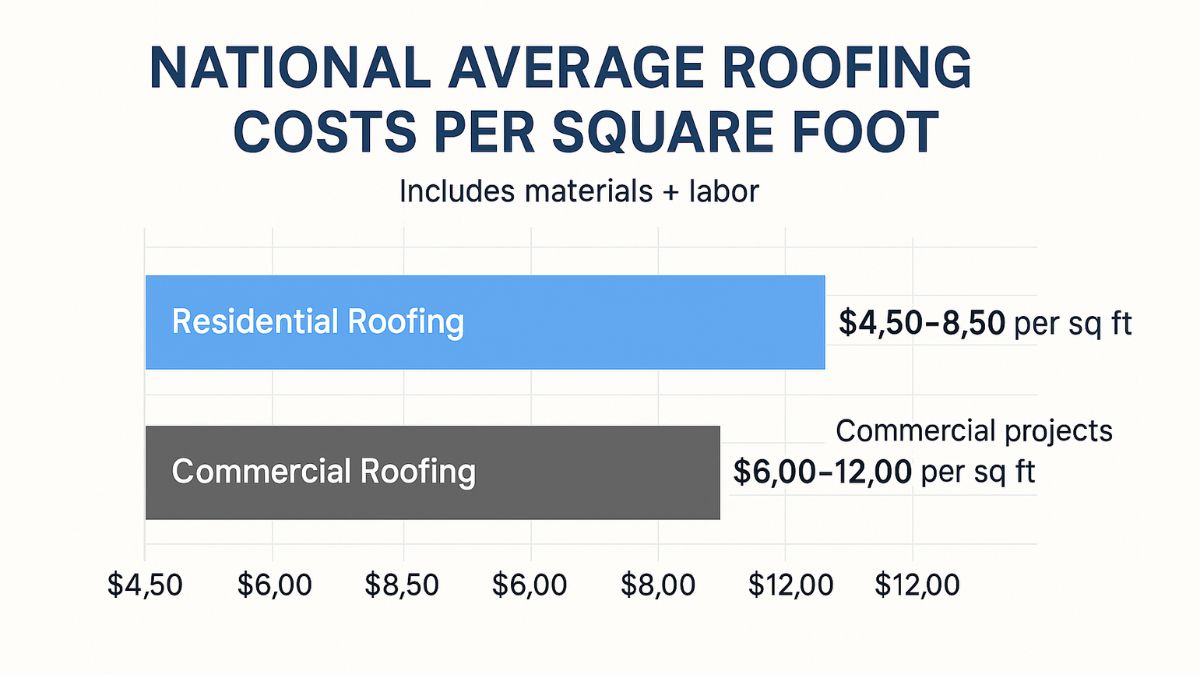
Commercial roof replacement projects can vary significantly in cost, depending on various factors such as the type of material used, labor costs, and the size of the project. On average, commercial contractors typically charge anywhere from $5 to $12 per square foot for roof replacement.
Here are examples of recent commercial roof replacement projects with cost breakdowns:
What factors influence commercial roof replacement costs?
Contractors consider factors like roof size, material quality, labor costs, location, roof complexity, accessibility, and additional features when determining the overall cost.
Which types of commercial roofing materials are commonly used?
Common materials include EPDM, TPO, PVC, metal, and built-up roofing systems, each with varying costs, durability, energy efficiency, and maintenance requirements.
What labor costs are involved in commercial roof replacement?
Labor costs include crew size, skill level, experience, debris removal, equipment rental, and safety measures.
What is the average cost range for commercial roof replacement projects?
Contractors typically charge a cost range per square foot, influenced by geographical location, market demand, and project scope. Recent projects can provide cost breakdowns for reference.